Note: I wrote and gave this talk a year ago on Sunday, April 20, 2014. A sister in my ward asked me for a copy, and I kept putting off typing up the edits I made to it on the stand (as I am wont to do when giving a talk). But now here it is, in the form I delivered it. I hope you enjoy it this Easter season!
In the Book of Mormon, the prophet Nephi quoted Isaiah extensively. Afterwards, he recorded his own prophecies of Christ. He gave this explanation for such a record:
“For we labor diligently to write, to persuade our children, and also our brethren, to believe in Christ, and to be reconciled to God, for we know that it is by grace that we are saved, after all we can do… and we talk of Christ, we rejoice in Christ, we preach of Christ, we prophesy of Christ, and we write according to our prophecies, that our children may know to what source they may look for a remission of their sins.”
The source for the remission of our sins is our Savior, Jesus Christ, and my purpose in this talk is to “persuade [my] children, and also [you, my] brethren [and sisters], to believe in Christ, and to be reconciled to God”, and perhaps together we can come to better remember that source, Jesus Christ.
At a literacy conference I attended last month I learned something about how we come to remember things. One of the presenters was discussing techniques to teach reading comprehension to students. She said, “Children remember what they deeply understand.” I would say this applies to all of us as well. I wasn’t looking for a gospel connection at the time, but unexpectedly found one the following Sunday during a Relief Society lesson on the sacrament.
In that week’s lesson, Joseph Fielding Smith said, “To eat in remembrance of him. Does that mean that I would just remember that nearly 2,000 years ago wicked men took him, hung him on the cross, drove nails in his hands and feet and left him there to die? To me it has a far deeper meaning than that. To remember him—why was he on the cross? What benefit comes to [me] because he was on the cross? What suffering did he go through on the cross that I might be redeemed or relieved of my sins?” To remember the Savior means more than just to remember what happened. Remembering the Savior involves striving to more deeply understand this monumental gift we have been given.
For the past few months I have been studying the atonement with a greater purpose than I have in several years. In the years since I last made a meaningful study of the atonement, I have studied various principles of the gospel, and with great fervor. However, none of that studying as changed my heart and my life as much as the past few months have. Elder Tad R. Callister explained this change in his book, The Infinite Atonement, “Every attempt to reflect upon the Atonement, to study it, to embrace it, to express appreciation for it, however small or feeble it may be, will kindle the fires of faith and work its miracle towards a more Christlike life. It is an inescapable consequence of so doing.”
I would like to share a few of the things with you that I have learned about the atonement in the past few months - probably nothing new to many of you, but maybe, like me, you put your study of the atonement on the back burner for a while as you studied other gospel topics, and so a refresher might be nice. If these concepts seem new to you, and even if they aren’t new, I challenge you to immerse yourself in a study of the atonement of Jesus Christ and see if it doesn’t change your life for the better.
One of the most life-changing principles of the atonement is that it is infinite. The word infinite probably conjures up images of eternity, or the number of grains of sand on the beach. But when we talk about the atonement being infinite, what we mean is that the atonement covers everything. The atonement of our Savior, Jesus Christ is so much more far-reaching than any one of us has probably ever experienced. But I am sure that if you look in your own life you can see the atonement touching you in many different ways.
If you have repented of a serious sin, you have experienced the atonement.
If you have lost a loved one and found peace after their death, you have experienced the atonement.
If you have been given what seemed like an insurmountable task and found motivation and strength to achieve it, you have experienced the atonement.
If you have suffered at the hands of another and been able to find healing and forgiveness, you have experienced the atonement.
If you have struggled through physical ailments or infirmities and received healing, or simply the fortitude to endure, you have experienced the atonement.
If you have ached because of the injustices of this life but been given the gifts of patience and compassion, you have experienced the atonement.
If you have struggled with the idea of being perfect, feeling like you can never do enough, and felt that burden of perfection lifted as you took upon you the Savior’s yoke, you have experienced the atonement.
I hope you can see the connection between all of these situations, even though they may not seem to have much in common. Committing a sin may seem different than suffering at the hands of an abuser, but the underlying theme is the healing, peace, and perfection that can come through the atonement of Jesus Christ.
In the New Testament is recorded a story about a young ruler who came to the Savior asking what he could do. The young man asked the Savior, “Good Master, what good thing shall I do, that I may have eternal life?” The Savior proceeded to list the ten commandments, to which the young man, apparently free of any major sins, responded, “All these things have I kept from my youth up: what lack I yet?” Of course, when the Savior responded with the higher laws of consecration and discipleship, the young man either decided that he didn’t have what it takes or he didn’t have the desire to make that kind of commitment, and so he left, sorrowful.
This young man had kept all of the commandments from his youth until the day he questioned the Savior. To me it appears that he had not committed any grievous sins, and had lived a reasonably good life. This young man had probably never needed to confess a sin to his bishop and work through the painful process of repentance for a serious transgression. But the atonement is so much more than just a tool for the abandonment of serious sin.
General Relief Society President Linda K. Burton taught, “Like the rich young man in Jesus’ day, sometimes we are tempted to give up or turn back because maybe we think we can’t do it alone. And we are right! We cannot do the difficult things we have been asked to do without help. Help comes through the Atonement of Jesus Christ, the guidance of the holy Ghost, and the helping hands of others.”
The atonement is the source of power that allows us to “do all things”, as the apostle Paul wrote, “through Christ who strengtheneth [us].” The atonement of Jesus Christ can give us strength to do those things that seem impossible to do. Former Relief Society president Sheri Dew said, “Our responsibility is to learn to draw upon the power of the Atonement. Otherwise we walk through mortality relying solely on our own strength. And to do that is to invite the frustration of failure and to refuse the most resplendent gift in time or eternity. “For what doth it profit a man if a gift is bestowed … and he receive not the gift?””
We must learn to access the atonement if we want to receive power to “do all things” and “be perfect.”
But what about if we aren’t quite where the young ruler was yet? What if we aren’t ready to say, “What lack I yet?” because we are caught up in sin? What if we were once like the young ruler, able to say that we have kept the commandments from our youth, but today we have stumbled and fallen and now feel as if our perfect record has been tarnished?
Former General Relief Society president Julie B. Beck said, “Everyone makes mistakes… I often hear about the chosen, royal generation of this dispensation, but I have never heard it called the perfect generation. Teenagers are especially vulnerable because the power of Satan is real, and they are making their first big, independent choices. Consequently, they are also making their first big mistakes.”
First, do not despair. Isaiah wrote, “Come now, and let us reason together, saith the Lord: though your sins be as scarlet, they shall be as white as snow; though they be red like crimson, they shall be as wool.” If you have ever spilled red punch on a white blouse, you know how hard it is to get those red stains out of that white cloth. More often than not, the white clothing is tarnished forever and good for nothing but a rag. Our lives are much more precious to God than a piece of clothing, and He has given us the ultimate stain remover. The atonement of Jesus Christ can surely erase those sins and cleanse our souls so that not only are we white again, but we can be even better than before. The only barrier between our crimson present and our pure white future is true repentance.
President Beck taught, “We are commanded to repent. The Savior taught that unless we repent and “become as a little child, … [we] can in nowise inherit the kingdom of God.” We must not let one little cup of coffee, one bad habit, one bad choice, one wrong decision derail us for a lifetime.” When we take a step off the path, we must not let despair or feelings of failure keep us from continuing to step forward and allowing the atonement of Jesus Christ to change our very nature.
The repentance process can change us in a very real way, but true repentance requires us to really gain a deeper understanding of the atonement. True repentance cannot be reduced to a process with steps that we simply check off as we proceed through them. Teaching a five step process to children is useful, but later insufficient for us to develop the understanding of the atonement that we will need in order to truly change. Elder Callister describes repentance as “a melting, softening, refining process that brings about a mighty change of heart… It is a burning resolve to make amends with God at any cost.”
But even with that burning resolve, President Beck explained that, “It is not possible to make real change all by ourselves. Our own willpower and our own good intentions are not enough. When we make mistakes or choose poorly, we must have the help of our Savior to get back on track. We partake of the sacrament week after week to show our faith in His power to change us. We confess our sins and promise to forsake them.” We cannot change on our own. All the burning resolve in the world will not change us if we do not allow the atonement to change us. Elder Callister taught that the power of the atonement is key to that change, (quote) “If there were no atonement, there would be no opportunity to repent. Men might feel sorrow; they might change their behavior within certain parameters; but no divine rehabilitation process would be in operation. Simply stated, without the atonement, there would be no cleansing of the sinner’s soul regardless of any actions on his part.” (close quote)
We need the atonement in order to truly change and become more than we are, better than we were yesterday.
So how do we allow the atonement to change us, to change our lives? Whether we are seeking purification from a transgression, or healing for a wounded heart, or strength to become perfect through Christ, the power of the atonement can help us, if we can only figure out how to access that power.
I suggest that the key to accessing the power of the atonement is through studying the atonement. It seems like such a simple thing, to study the atonement of Jesus Christ - but the doctrine of the atonement is more complicated than one family home evening lesson, one Sunday school lesson, one Conference talk, or one read through of the Book of Mormon can unravel. There is a depth and breadth to the atonement of Jesus Christ that we will only come to understand as we make the atonement a focus of our regular gospel study. The prophet Joseph Smith taught, “The fundamental principles of our religion are the testimony of the Apostles and Prophets, concerning Jesus Christ, that He died, was buried, and rose again the third day, and ascended into heaven; and all other things which pertain to our religion are only appendages to it.” Because the atonement of Jesus Christ is the central doctrine of His gospel, a study of that atonement can change our lives more than a study of any other gospel doctrine will change our lives. Elder Callister wrote, “As our vision of the atonement is enhanced, our motivation to embrace its full effects is proportionally increased.” An understanding of the atonement inspires us to live the gospel more fully. President Howard W. Hunter gave this promise, “As we come to understand [Christ’s] mission and the atonement which He wrought, we will desire to be more like him.” and Elder Neal A. Maxwell testified, “The more we know of Jesus’ Atonement, the more we will humbly and gladly glorify Him, His Atonement, and His character.”
If you aren’t convinced that a deep understanding of the atonement can change our hearts and our lives, let me leave you with an example of such a change. In Mosiah chapters 3 and 4 we find one of the most beautiful discourses on the atonement. King Benjamin taught his people about the atonement of Jesus Christ, about his life, suffering, death, and resurrection. After hearing King Benjamin’s teachings and testimony, his people shouted, “Yea, we believe all the words which thou hast spoken unto us; and also, we know of their surety and truth, because of the Spirit of the Lord Omnipotent, which has wrought a mighty change in our hearts, that we have no more disposition to do evil, but to do good continually.”
King Benjamin’s discourse brought the spirit into the lives of the people, and their hearts were changed by the power of his words and testimony. The evidence of their change of heart was that they had “no more disposition to do evil, but to do good continually.” We will find this evidence in our own lives as we study the atonement of Jesus Christ and come to more deeply understand that central doctrine of the gospel, is my testimony.

Showing posts sorted by relevance for query atonement. Sort by date Show all posts
Showing posts sorted by relevance for query atonement. Sort by date Show all posts
Saturday, April 4, 2015

Monday, March 26, 2012
What if I make a wrong choice?–the miracle of forgiveness
I have mentioned before that I am kind of tender hearted (i.e., a sap) and just about anything will make me bawl like a baby.
Like today when we got our April Ensign and Friend magazines and I started looking through the Friend magazine (I like to find the stories that will be applicable to our family so I can turn to them quickly when I want to read them with the kids – although we usually end up reading the entire magazine) I cried reading just about every single story in there. Little children are very precious to me, and perhaps this is why I am such a softy when it comes to kids (a few weeks ago the choir sang A Child’s Prayer with a children’s chorus and let me tell you how I cried – I couldn’t help myself!)
I am assuming the editors chose a theme of repentance for the Friend this month because we will celebrate Easter this month, and that’s what Easter is all about (the atonement and resurrection). But whatever their reasoning, I want to give a big hug to the editing team of the Friend this month. Toward the middle of the magazine was a big colorful spread about making good media choices. There were some cute stories from kids around the United States, and then I saw this in the middle of the page:

If you don’t know how important it is that we teach children that making unwise choices is part of this mortal experience let me tell you now. Please, please teach your children that it is okay to make mistakes – Why? Because you need to teach them how to access the atonement.
I cannot stress the importance of this enough. I have seen the despair and hopelessness that comes from an understanding of the commandments without an understanding of the atonement. Please do not teach your children the commandments of the Lord if you are not following up immediately with teachings of the atonement.
Think about what you are teaching your children if you spend all your time teaching them about obedience and do not teach – by word as well as by example – about the power of the atonement. You are teaching them what they should or should not be doing, but you haven’t taught them what to do when they don’t get it right. It’s like you are throwing your child into the ocean without teaching them how to swim. Who would do that to their child?
What do you do when you make a poor decision? Do you use the atonement? Let your children see you using the atonement. Teach by example.When you get frustrated with your children, apologize to their faces, and ask for forgiveness, and tell them that you are going to pray to Heavenly Father to forgive you as well. Our children need to see us using the atonement.
We cannot just teach our children what the atonement is by giving them the cute little “ABC’s” of the repentance process. What would we expect if we gave our kids a neat little rhyme that tells them how to swim, but we never take them to the pool to practice swimming?
I think that teaching the atonement by example is harder for us to do as parents than maybe teaching other gospel principles (such as service) because we often think of repentance as a private thing. Of course I am not suggesting that you tell your kids every bad things you have done/said, but when they witness you make a poor choice let them also witness the repentance process. You don’t have to invite them to come watch you pray, but you can let them know that you are going to go say a prayer now to ask Heavenly Father for forgiveness, and you can tell them how you are going to make things right (and be really specific with this one, and let your children watch you make the thing right).
When your child makes a poor choice, do not scold them or lecture them. Use it as a teaching moment to bear your testimony to them of the power of the atonement.
There are too many people who were raised in the Church who have either left the Church or are still active but in deep despair and pain because they were not taught the true Gospel – that the Savior suffered for our sins and that by His blood we can be made perfect. Not just okay again, but perfect. Absolutely sin-free through the atonement. I see the hurt in their hearts and in their lives when they think because they broke a commandment (even a very serious commandment) that there can be no forgiveness for them – and they are good for nothing. But how wrong are they! They are good for everything, and if only someone had taught them of the atoning sacrifice of their Savior and how to use it!
Can you tell this is close to my heart?
I believe in the atonement of our Savior. I know that He took upon Himself every poor choice we can even imagine making. I know more perfectly than I know just about anything that we are not lost causes, that we can be okay with ourselves because He loves us and wants us to come to Him with our burdens and our struggles and our pain and our agony because He suffered it first. He already took everything on Himself. We just need to be wiling to give it all to Him.
I realize that in order for us to teach this gospel principle to our children we need to understand it and be applying it ourselves. If you don’t have a testimony of the atonement, if you don’t know how to use it, start today and learn about it. Study about the atonement, talk to your bishop/parent/spouse. And most importantly, start using the atonement in your life! (it is a daily-use principle)
Here are some resources I found for you:
What is the Atonement of Jesus Christ? (mormon.org)
The Atonement of Jesus Christ (lds.org)
Sins and Mistakes, Elder Dallin H. Oaks
Helping Children Repent
The Miracle of Forgiveness, Spencer W. Kimball
Believing Christ, Stephen E. Robinson (there is a BYU speech here that is probably like a short version of the book, but I highly recommend the book – you can get it for about $1 on Amazon)
everything I have written about the atonement – me
How do you teach your children about the atonement? Do you let your children see you use the atonement?
Thursday, December 29, 2011
Redemption and Repentance
(find the talks here – Redemption – and here – The Divine Gift of Repentance)
“The choice to repent is a choice
to burn bridges in every direction
[having determined] to follow forever only one way,
the one path that leads to eternal life.”
-Professor Noel Reynolds
I have a strong testimony of the principle of repentance and the gift of the atonement. I am not sure when I gained that testimony – I am sure it came gradually over the years as I grew up. I am also sure that the strength of that testimony is helped by the strength of my testimony that God loves all of His children. When you know that God loves His children, it is easy to understand that He would give them a way to get back to live with Him. A loving God would not shun us at the first hint of sin.
As strong as my testimony of repentance has been, I think that my understanding as been somewhat superficial. This quote from Elder D. Todd Christofferson struck me, “Attempts to create a list of specific steps of repentance may be helpful to some, but it may also lead to a mechanical,check-off-the-boxes approach with no real feeling or change.” I want to be sure that I am not approaching repentance with “no real feeling or change.” I want to change. That is the glory of repentance.
I can remember when the first spark of real understanding of the atonement happened for me. When I was a young woman, a young man in our ward bore his testimony one Fast Sunday about the atonement. He talked about how it is the atonement that allows us to do better each day. He didn’t talk about repenting from grievous sins, he was talking about the “little” things – learning and growing each day. That has always been the foundation of my testimony of the atonement – it is the power by which we progress each day. When I get impatient with my children, it is the atonement that allows me to try again the next day (or the next minute!) and erases all the mistakes I make as I learn how to be a mother.
That’s a pretty comforting knowledge – that my mistakes are not lasting. If I partake of the atonement each day – even in each minute of each day – my mistakes can be washed away!
Having this “daily repentance” understanding of the atonement has probably been the foundation of my understanding of repentance.
The underlying principle in repentance is change. Elder Christofferson said, “Perhaps as much as praying for mercy, we should pray for time and opportunity to work and strive and overcome.” How often do we pray for forgiveness without praying for the strength and opportunity to change and do things differently?
The ability we have to repent comes from the plan of redemption. Elder LeGrand R. Curtis Jr said, “‘To redeem’ is to buy or to buy back…if we repent, we can be forgiven of our sins, the price having been paid by our Redeemer.” This redemption is provided, whether or not we partake of it. As President Packer said, “There is a Redeemer, a Mediator, who stands both willing and able to appease the demands of justice and extend mercy to those who are penitent.”
Ironically, the most beautiful part of the atonement to me is that there is nothing we can do to repay the Savior. Elder Curtis said, “[T]he plan of redemption calls for our best efforts to fully repent and do the will of God.”
His statement reminded me of a BYU Devotional by Brad Wilcox, in which Brother Wilcox compared the atonement to a parent paying for piano lessons for their child.
Christ’s arrangement with us is similar to a mom providing music lessons for her child. Mom pays the piano teacher. How many know what I am talking about? Because Mom pays the debt in full, she can turn to her child and ask for something. What is it? Practice! Does the child’s practice pay the piano teacher? No. Does the child’s practice repay Mom for paying the piano teacher? No. Practicing is how the child shows appreciation for Mom’s incredible gift. It is how he takes advantage of the amazing opportunity Mom is giving him to live his life at a higher level. Mom’s joy is found not in getting repaid but in seeing her gift used—seeing her child improve. And so she continues to call for practice, practice, practice.Elder Curtis quoted the hymn Savior, Redeemer of My Soul and I loved the line “Never can I repay thee, Lord, But I can love thee.”
How true! I hope that I can do my best to love the Lord and to repent daily of my weaknesses, making them strengths through His infinite atonement.
How do you partake of the atonement? What are your feelings about the plan of redemption? Are you sometimes discouraged when you have to repent over and over again? Do you recognize the growth that you have made in your repentance journey? What is the meaning of the atonement and repentance for you personally?
Find more insight on this talk over at
Diapers and Divinity’s General Conference Book Club
Friday, July 8, 2011
“Not My Will, But Thine, Be Done”
“We cannot of ourselves,
no matter how we may try,
rid ourselves of the stain which is upon us
as a result of our own transgressions.”
(Marion G. Romney)
This is kind of an intimidating post to write – and part II of this lesson (the Crucifixion) will be next week. The atonement of our Savior, Jesus Christ, is so sacred, so important, and so meaningful that I feel like I cannot do justice writing about it. I don’t even feel like I completely understand His atonement, but I am learning more about it each time I study the scriptures, study the account of His atonement, and listen to the words and testimonies of our living prophets – and of my friends and acquaintances in the gospel.
There are three important blessings that we receive because of the atonement of the savior. They are peace, forgiveness, and eternal life. Sometimes I forget that the atonement can give me all three things. I think most of us agree that the atonement can give us eternal life in the physical sense. We usually have no doubt in our minds that we will all be resurrected. It’s a pretty straightforward concept, and a blessing that we all receive unconditionally, due to the Savior’s atoning sacrifice. And I think that maybe most of us are pretty solid in our testimony that through the atonement we can be forgiven for our sins (although sometimes we have serious misconceptions about that, too – which I’ll get to later). The concept I struggle with the most is remembering that the atonement can give us peace – even, and especially, when we are suffering due to either this natural world, or the sins of others.
There were a few things that stuck out to me as I read the three accounts of the Savior’s atonement in Matthew, Mark, and Luke. In Matthew and Mark, the Savior is recorded as saying “My soul is exceedingly sorrowful, even unto death.” In Luke’s gospel, he leaves that part out, but includes an account of an angel with Christ “strengthening him.” Another thing that Luke included in his account was the Christ was “wont” to visit the garden of Gethsemane. (wont = accustomed). It makes me wonder if the Savior was on the look out for the perfect place to atone for the sins of the world. Like Joseph, who prayed in the private grove of trees, I wonder if the Savior had noticed that this particular garden was relatively quiet and few people ever went there. Maybe a disciple owned the garden, and had told the Savior that if He ever needed a quiet place to go and pray, He was welcome to use His friend’s garden. The fact that the Savior was accustomed to being in Gethsemane makes the atonement seem very thoughtful. He didn’t just stop one day and take upon Himself the sins of the world. He had been thinking about it, probably since He was a child and was “about [His] father’s business.” I wonder how many times He had prayed previously in Gethsemane, perhaps asking the Father to give Him strength, so that when the time came, He could do what was necessary to save the world.
 Image source.
The Savior Took Upon Himself The Sins of the World
I think that it is especially important to remember that the Savior voluntarily took upon himself “suffering pains and afflictions and temptations of every kind;” (Alma 7:11). No one made Him do it. No one took the Savior’s life. And no one put the sins of the world on His shoulders. The scriptures usually say that He “took upon himself” the sins, afflictions, and infirmities of the world. He took all the suffering and put it on himself.
And it was painful. Very painful. “Which suffering caused myself, even God, the greatest of all, to tremble because of pain, and to bleed at every pore, and to suffer both body and spirit—and would that I might not drink the bitter cup, and shrink—” (Doctrine and Covenants 19:18) The pain and suffering the Savior endured in the garden was so painful that even He, the Son of God asked God the Father to remove the cup from Him. But even as He said it, He knew it had to be done, and so He said “Not my will, but thine, be done.”
Nevertheless, glory be to the Father, and I partook and finished my preparations unto the children of men. (Doctrine and Covenants 19:19)
We Need the Atonement
As soon as Adam and Eve fell from the garden, we needed the atonement. Our bodies and this world are in a fallen state, and the only thing that can return them to their perfect state is the sacrifice of the Savior. When we sin, we move ourselves even farther from Heavenly Father, and nothing can return us except the Savior’s atonement.
My favorite talk ever is The Mediator, which was given in a Conference address many years ago by Elder Boyd K. Packer. I have included the video on this post so you can watch it. I can never get through it without bawling my eyes out – especially when Elder Packer starts talking about mercy and justice.
Mercy and justice are the two main reason we need the Savior’s atonement. Because I think that Alma says it best, I will include mostly what he says in Alma chapter 42. When Adam and Even fell from the garden, they became mortal so that “there was a time granted unto man to repent, yea, a probationary time, a time to repent and serve God.” If Adam and Eve and been allowed to stay in the Garden of Eden after they had transgressed and partaken of the tree of knowledge of good and evil, they would not have been able to repent for their transgression and they would have lived forever in their sin, which means that they would not have been able to live in the presence of God. “But behold, it was appointed unto man to die—therefore, as they were cut off from the tree of life they should be cut off from the face of the earth—and man became lost forever, yea, they became fallen man. And now, ye see by this that our first parents were cut off both temporally and spiritually from the presence of the Lord; and thus we see they became subjects to follow after their own will.” Because our souls do not die (not in the same sense as our bodies die – our souls never end), the fall of Adam and Eve brought a kind of death to our souls – the inability to be in the presence of our Father. When we talk about spiritual death, that is what we mean – not being in the presence of the Father – because our spirit don’t actually die.
So now we have mortal men, who are in a state of spiritual death, and who will eventually experience a physical death. If the world had been left that way, God would have lost everything – His children and His world. And there would have been no way for His children to come back to Him again.
“Therefore, according to justice, the plan of redemption could not be brought about, only on conditions of repentance of men in this probationary state, yea, this preparatory state; for except it were for these conditions, mercy could not take effect except it should destroy the work of justice. Now the work of justice could not be destroyed; if so, God would cease to be God. And thus we see that all mankind were fallen, and they were in the grasp of justice; yea, the justice of God, which consigned them forever to be cut off from his presence.” It is important to note that it was the justice of God which cut us off from His presence. God follows laws – He has to adhere to justice. He cannot make His own arbitrary rules about justice. And so, in order to adhere to justice and save His children, “God himself atoneth for the sins of the world, to bring about the plan of mercy, to appease the demands of justice, that God might be a perfect, just God, and a merciful God also.”
And now, for my favorite verses of scripture of almost all time (this combined with Mosiah 4 would probably do it for me):
“But there is a law given, and a punishment affixed, and a repentance granted; which repentance, mercy claimeth; otherwise, justice claimeth the creature and executeth the law, and the law inflicteth the punishment; if not so, the works of justice would be destroyed, and God would cease to be God.
“But God ceaseth not to be God, and mercy claimeth the penitent, and mercy cometh because of the atonement; and the atonement bringeth to pass the resurrection of the dead; and the resurrection of the dead bringeth back men into the presence of God; and thus they are restored into his presence, to be judged according to their works, according to the law and justice.
“For behold, justice exerciseth all his demands, and also mercy claimeth all which is her own; and thus, none but the truly penitent are saved.
“What, do ye suppose that mercy can rob justice? I say unto you, Nay; not one whit.” (Alma 42:22-25)
Before you watch this video, I want you to read what Elder Packer said before he began his talk (from which this video was made). Read the words carefully, and take this video seriously.
“What I shall say I could say much better if we were alone, just the two of us. It would be easier also if we had come to know one another, and had that kind of trust which makes it possible to talk of serious, even sacred things.
“If we were that close, because of the nature of what I shall say, I would study you carefully as I spoke. If there should be the slightest disinterest or distraction, the subject would quickly be changed to more ordinary things.”
I have a testimony of the Savior’s atonement. I am amazed at how intricate and thought out and thorough the whole plan of salvation is. I am grateful for a perfect, just God who also found a way to be a merciful God. I know that the Savior took upon himself the sins and suffering of the world, and I know that through the atonement we can find peace, forgiveness, and eternal life.
Please share your thoughts and testimony about the Savior’s atonement with me.
Sunday, April 20, 2014
Change Your Life
There are a lot of things I don't know yet. And it seems the more I study, the more I realize I don't know. But I am trying to learn and study and grow. For the past several years I have done a lot of gospel studying. Mostly I have been studying about womanhood and what it means to be a woman and what my place and my responsibilities are as a mother.

From now on in my study of gospel topics I am looking for the connections to the atonement. What does the atonement teach me about my purpose as a woman?
There is a power that comes from studying the atonement, and I hope that putting the atonement at the center of my other studies will help me better understand those other studies.
(by the way, Elder Callister's book is a fantastic place to start your study of the atonement!)
Do you notice a change in your life when you study the atonement? How does the atonement help you understand other gospel topics that you study?
Tuesday, September 20, 2011
The Miracle of the Atonement
Remember to enter the giveaway of the temple prints!
Sometimes we have to get to the depths of despair in order to experience the depths of humility necessary to partake of the atonement. Elder C. Scott Grow said, “We access the Atonement through repentance. When we repent, the Lord allows us to put the mistakes of the past behind us.” But finding our way to repentance is not always easy. Sometimes we have a lot of bitterness and anger and guilt. Finding my way to humility is usually my roadblock to repentance and partaking of the atonement – not only in my own weaknesses, but in my hurt.
“He heals not only the transgressor, but He also heals the innocent who suffer because of those transgressions. As the innocent exercise faith in the Savior and in His Atonement and forgive the transgressor, they too can be healed.” There is something required of us to be healed when we are suffering because of the sins of others – we have to forgive. “The Atonement is available to everyone all the time, no matter how large or small the sin, ‘on conditions of repentance.’” For the one who has been wronged, that repentance comes through forgiving the person we feel has wronged us. “Repent—repent, lest … your sufferings be sore—how sore you know not,how exquisite you know not, yea, how hard to bear you know not.” If we don’t come to the Lord and partake of the atonement our suffering will be so hard to bear. I find myself carrying around a lot more than I really need to be carrying around because of that lack of humility that will allow me to repent and forgive.
“As you consider your own life, are there things that you need to change?Have you made mistakes that still need to be corrected?” I know that there are things that have need to change, but getting to the depths of humility where repentance is possible can be hard, especially when there is bitterness and hurt. I know that I need to let go of the hurt and forgive so that I can be healed, and so that I can change. “Forgive those who have wronged you. Forgive yourself.” It sounds easy, but it is hard – both to forgive others and to forgive ourselves. I struggle with both sides of forgiveness – both forgiving myself and forgiving others. “When we sin, Satan tells us we are lost. In contrast, our Redeemer offers redemption to all—no matter what we have done wrong—even to you and to me.” Satan’s lies come when we deny forgiveness, too. Maybe we aren’t good enough to forgive. Maybe the person we need to forgive isn’t worth it. All these are lies. The atonement covers all sin and all pain.
Elder Grow mentioned that Christ “inherited power over physical death.That allowed Him to sustain His life as He suffered ‘even more than man can suffer, except it be unto death;’” I have always understood that the Savior had power over death and that’s why he was resurrected, but it is profound to think that the suffering that Christ endured would have caused a man to die – but Christ had power over death. He was the only one who could suffer for us.
What changes do you need to make in your life? Do you need to more freely forgive, whether yourself or another? Do you need to be more humble so that you can change things in your life? How have you allowed the atonement to work in your life? Have you come unto Christ and been healed?
Monday, September 12, 2011
The Atonement Covers All Pain
This subject is one I feel particularly strongly about. I have a sincere, deep testimony that the Atonement is real, that the Savior feels all that we feel, and that through the atonement we can be healed. It is the most important part of my testimony, and the thing I feel that I know is true.
Elder Kent F. Richards’ talk covered all that I feel is true about the Savior’s atonement. We feel a lot of different kinds of pain in this life. “Pain is a gauge of the healing process.” And healing comes through the atonement. The purpose of this life was to experience pain and loss so that we can “know good and evil, and the joy of our redemption, and the eternal life which God giveth unto all the obedient.” (Moses 5:11)
Elder Richards quoted Elder Rober D. Hales who said, “Pain brings you to a humility that allows you to ponder. It is an experience I am grateful to have endured. …I learned that the physical pain and the healing of the body after major surgery are remarkably similar to the spiritual pain and the healing of the soul in the process of repentance.”
There are three different sources of pain. The first is the pain we experience simply because we live in an imperfect world. This would be physical pain that happens simply because it happens – pain caused by natural disasters, pain caused by health problems, and so forth. The second pain is pain caused by the actions of others. And the third is pain that we bring upon ourselves due to our sins.
No matter the source of our pain, no matter the severity, the Lord’s atonement will cover it. “The Savior is not a silent observer. He Himself knows personally and infinitely the pain we face.” When we truly believe that the Lord intimately knows our pain, I think we are more likely to come to Him for healing and saving. “Let us therefore come boldly unto the throne of grace, that we may obtain mercy, and find grace to help in time of need.” (Hebrews 4:16 – emphasis added) I love the word “boldly” in this scripture. We do not need to be timid when coming unto the Savior. When we have faith the the Lord knows our pain in a complete and personal way, we can come to Him boldly, and partake in His grace, and be healed.
When the pain is caused due to our own sins, we may fall into Satan’s trap and think that atonement cannot (or maybe should not) heal us. But the Elder Richards’ testifies, “For this pain too there is a cure that is universal and absolute. It is from the Father, through the Son, and it is for each of us who is willing to do all that is necessary to repent. Christ said, ‘Will ye not now return unto me … and be converted, that I may heal you?’”
When are we done repenting? When have we been fully healed? “Perhaps His most significant work is in the ongoing labor with each of us individually to lift, to bless, to strengthen, to sustain, to guide, and to forgive us.” Until the judgment day, we are never done. The Lord is working on us every day until the perfect day.
This year as we studied the New Testament in Gospel Doctrine class, I was struck profoundly by the reminder that Christ chose to suffer for us. “He could have known how to succor us simply by revelation, but He chose to learn by His own personal experience.” (President Henry B. Eyring) No one made Him do it. Sure, he was foreordained for the atonement, but He still had to make the choice. “During His mortal life Christ chose to experience pains and afflictions in order to understand us. Perhaps we also need to experience the depths of mortality in order to understand Him and our eternal purposes.” I never thought of the second half of this statement – that perhaps our mortal experience is to help us understand Him. How can we ever understand the Savior? Perhaps by passing through the trials of mortality we can begin to understand the Savior and our eternal purpose.
As we approach the Lord for healing, it would be good for us to remember that sometimes the healing comes in a way we don’t expect. “Our mortal circumstances may not immediately change, but our pain, worry,suffering, and fear can be swallowed up in His peace and healing balm.” But it is significant to also remember that “All souls can be healed by His power. All pain can be soothed.”
I testify that through the atonement of our Lord and Savior, Jesus Christ, we can be healed – not matter the cause of our pain. He did, indeed, feel all our pain. He will heal us.
Have you experienced the Lord’s healing power? Do you boldly approach the Savior for healing? How patient are you in waiting for the Lord’s healing power?
Sunday, May 5, 2024
Nothing, and Yet Everything
In Mosiah Chapter 4, King Benjamin has just finished speaking to his people when they "viewed themselves in their own carnal state, even less than the dust of the earth." After they had learned about the atonement of Jesus Christ, an overwhelming feeling of worthlessness filled the people's hearts. King Benjamin responded to them by encouraging their sense of their nothingness.
Hundreds of years before this, Moses had a similar experience. In Moses 1 he says, "I know that man is nothing, which thing I never had supposed." The irony of this statement is that Moses had just been in the presence of God, who had proclaimed to him, "behold, thou art my son... I have a work for thee, Moses, my son; and thou art in the similitude of mine Only Begotten". How did Moses' thought process go from "You are my son" to "I am nothing"? How did the King Benjamin's people go from learning of the atonement of Jesus Christ to feeling as if they
It is as if learning of the beauty of the Love of God (which is the atonement of Jesus Christ - see 1 Nephi 11) stirs in man's heart an awareness of their nothingness and insignificance in the eternal plan - or rather, that the glorious truth that "the worth of a soul is great in the sight of God" stirs that very soul to the greatest depths of humility.
There is so much beauty in opposition, in contrast, and in juxtaposition. Indeed, the gospel requires a complement of seemingly opposing truths - justice and mercy, nothingness and infinite worth, dark and light. Jacob's discourse in 2 Nephi 2 eloquently describes this necessary opposition.
For it must needs be, that there is an opposition in all things. If not so... righteousness could not be brought to pass, neither wickedness, neither holiness nor misery, neither good nor bad. Wherefore, all things must needs be a compound in one; wherefore, if it should be one body it must needs remain as dead, having no life neither death, nor corruption nor incorruption, happiness nor misery, neither sense nor insensibility.
In King Benjamin's discourse, he goes on to testify to the people that their feelings of nothingness were the key to salvation - but not just those feelings on their own. He testified that a person also needs a knowledge of the goodness of God, and also the atonement, and needs to put his trust in the Lord. Then "this is the man who receiveth salvation, through the atonement which was prepared form the foundation of the world for all mankind... and this is the means whereby salvation cometh."
What a beautiful illustration of the "compound in one" spoken of by Jacob in the Book of Mormon. We are everything to God, indeed, we are His children and the very reason for the existence of the atonement. And yet, we are less than the dust of the earth - we are so small and insignificant, which makes the magnitude of the atonement even more glorious.
Oh it is wonderful, that He would care for me enough to die for me. Oh it is wonderful, wonderful to me.
What do you think about the contrast between the humility of feeling the nothingness of man compared to the glory of the atonement, which is everything for us? Are there other places where you have experienced the "compound in one"?
Tuesday, November 13, 2012
The Lie of Perfection
Earlier this summer I wrote about spending “some” time in the scriptures every day. Today I was thinking about that again.
I know you all have been missing me on the blog (don’t tell me if you haven’t – I like to pretend I am important), and if you read my most recent post on Real Intent you might understand why I have been out of commission for a while. It’s hard to write about spiritual things when you feel utterly non-spiritual.
In short, my soul has not been doing a lot of delighting lately.
Part of that is pregnancy hormones (antepartum depression, anyone?), and part of it is a lack of patience and accepting God’s will. Cheryl wrote recently about how she always thought curve balls would come in a certain way, and the curve balls actually came in different forms than she had anticipated. I think part of my failure to endure is because the trials and adversity that I am experiencing are exactly the last thing I thought I would ever have to endure. I thought that because of choices I had made that I would be protected somehow from these trials.
Ha.
God can’t/won’t/doesn’t (not sure which one) usually protect us from any trials. He gives them to us maybe a little too willingly for our tastes, but He knows that we can handle it. And He provides a way for us to overcome or bear them. Every time.
There hath no temptation taken you but such as is common to man: but God is faithful, who will not suffer you to tempted above that ye are able; but will with the temptation also make a way to escape, that ye may be able to bear it. (1 Corinthians 10:13)
You’d think I had failed seminary with all the scripture mastery verses I seem to be forgetting these days.
You’re probably wondering at this point what on earth the title of this post has to do with the actual post. Well, nothing, yet. I got distracted.
This post has to do with me learning (again … funny how Heavenly Father has to teach us the same lessons over and over and over again … if only I would learn it the first time!) that I do not have to do everything all the time every day.
What does that mean?
It means that I do not have to study the scriptures for four hours a day. One verse, even reading my favorite verse is sufficient, and if I have time one day to study for an hour or so, then great. But forgoing scripture study because I can’t study the way I want to or think I should is a dumb reason not to study the scriptures.
“Spend some time in the scriptures each day.” – Sister Beck
It means that I do not have to clean all three bathrooms in my house all the way in one day. There is no way I can feed my children, dress my children, eat healthy food myself, and keep the house reasonably clean, plus have a little time to read or do something relaxing/recreational and clean all the bathrooms all the way in one day. It’s just not possible. Even if I think to myself “I have no plans today, I can do the bathrooms today.” Ha. Not likely, and I am probably just setting myself up for failure. However, not being able to clean every corner of the bathrooms every day does not mean I should never clean the bathrooms at all.
The other day I wiped down the counters and called it good. And guess what? I felt like I had done something! I didn’t need to be perfect. Today I cleaned all of one bathroom, (the counter was already wiped – ha!) and mopped the kitchen floor. There are still dishes to be done, but the floor is clean.
I don’t have to do it all, all at once.
 “Oh, please. Just let the Savior cover this day.
Let Him cover my inability to do and be everything I need to be and can’t be today.
Please let the atonement cover it.”
– Becca Riding, Cover Me, I’m Going In
The lie of perfection is that it is required of us to be 100% perfect 100% of the time, or we are complete and utter failures.
Hello – we are, by virtue of our mortal state, imperfect, and thereby “failures” (through this lens of this lie of perfection).
The hope comes in the atonement, and in doing the best we can.
Yes, I am applying the atonement to cleaning bathrooms.
Because of the atonement, I can wash the toilet in one of my bathrooms and feel like I have done enough. Some days it might be an entire bathroom, and some days it might be all three bathrooms but not the kitchen floor. Some days it might be one load of laundry and we eat frozen corn dogs for dinner.
The atonement covers all that. (if you haven’t read Becca Riding’s post about that over at Diapers and Divinity, you should. It is excellent).
One of the commenters on that post said, “As a mother I tend to put things off til the moment when all is well and no one needs me” But someone or something will always need us, and we cannot do it all, all at the same time, perfectly.
Thank heavens for the atonement.
Have you ever fallen into the trap of “perfection”? Or do you rely on the Savior’s atonement to perfect you, rather than your own works? Do you do nothing, for fear of coming up short? Or do you realize that no matter how much you do, you will always come up short, and then do as much as you can and let the atonement cover everything else?
Image Credit: Heath Robbins
Thursday, June 21, 2012
The Plan of Salvation
Book of Mormon Papers - a series of posts
containing papers I wrote for a
BYU Religion class my freshman year of college.

(Note: I don’t have much to say about this paper today… maybe because it’s pretty straight forward, and maybe because I have strep. Probably the latter.)
Isaiah’s main prophecies were concerning the first and second comings of Christ. Nephi loved the words of Isaiah, and because he did he wrote about them even when he was not directly quoting them. One of the most important points of Nephi’s discourse on Isaiah is the plan of salvation which he outlines in this discussion. How does Nephi describe the plan of salvation and what things does he emphasize? Nephi speaks almost entirely of Christ’s atonement and enduring to the end, two vital points of the plan of happiness.
Nephi testifies of the awesome power of the atonement as he describes it as “infinite for all man.” (2 Nephi 25:16) The plan of happiness hangs on the atonement. There can be neither salvation nor eternal life without the amazing sacrifice of the Lord and Savior Jesus Christ. For “there is none other name given under heaven save it be this Jesus Christ… whereby man can be saved.” (2 Nephi 25:20) The salvation that Nephi speaks about is the first condition of the atonement. By Christ’s sacrifice and resurrection all men are saved from the bonds of physical death which “he hath given… free for all men.” (2 Nephi 26:27)
However, Nephi continues and speaks of the second kind of salvation made possible by the atonement. This salvation is dependant upon man’s individual conversion and devotion. Nephi states this as his reason for speaking and teaching so much of Christ so that “our children may know to what source they may look for a remission of their sins.”( 2 Nephi 25:26) Jesus Christ’s atoning sacrifice redeems men from spiritual death on the condition of their belief and steadfastness. Christ’s grace will save man “after all [they] can do.” (2 Nephi 25:23) Man must believe in Christ and be reconciled to God. In order to help man become this reconciled being, Christ gave man His spirit to stay on earth after His ascension into heaven. This spirit is to aid in man’s conversion, allowing him to be saved by the grace of God. However, “the Spirit of the Lord will not always strive with man.” (2 Nephi 26:11) Nephi reminds man that the companionship of the Holy Spirit is also conditional upon man’s worthiness.
Nephi’s discourse on the first coming of Christ teach man “line upon line” and “precept upon precept” of the sacrifice of the Lord that makes the plan of salvation possible. Christ’s “infinite atonement” and the gift of the Holy Spirit which He left for man after his ascension are those tools and keys that the Lord has given to man for him to be saved, according to his steadfastness and faith.
What does the plan of salvation mean to you?
Sunday, January 5, 2014
Divorce and Family
I love learning about motherhood and the family, and my testimony of eternal families and the importance and benefit of a strong nuclear family unit is one of the reasons divorce was such a hard decision for me.
In October 2013
General Conference, Elder D Todd Christofferson (quickly becoming one of my favorite general authorities - if having favorites is allowed) said,
This would have been lemon juice in a paper cut if it wasn't for the next statement:
Yes! I can strive to duplicate the benefits of a traditional family! However, in order to do that, I need to know what the benefits are, and how to duplicate them. So that is my quest as a mother of a blended family - to create the benefits of a traditional family for my non-traditional family.

The most influential doctrine that will make this quest possible is the atonement of Jesus Christ. His eternal and universal atonement can and will cover all the gaps between what should be, and what is.
Isn't that what we expect the atonement to do in our personal lives? Then why not in the lives of our children? Can the atonement help my children experience the benefits of a traditional family, even though the family they are a part of now doesn't meet that ideal?
- Posted using BlogPress from my iPhone
In October 2013
General Conference, Elder D Todd Christofferson (quickly becoming one of my favorite general authorities - if having favorites is allowed) said,
A woman's moral influence is nowhere more powerfully felt or more beneficially employed than in the home. There is no better setting for rearing the rising generation than the traditional family, where a father and a mother work in harmony to provide for, teach, and nurture their children.
This would have been lemon juice in a paper cut if it wasn't for the next statement:
Where this ideal does not exist, people strive to duplicate it's benefits as best they can in their particular circumstances.
Yes! I can strive to duplicate the benefits of a traditional family! However, in order to do that, I need to know what the benefits are, and how to duplicate them. So that is my quest as a mother of a blended family - to create the benefits of a traditional family for my non-traditional family.

The most influential doctrine that will make this quest possible is the atonement of Jesus Christ. His eternal and universal atonement can and will cover all the gaps between what should be, and what is.
Isn't that what we expect the atonement to do in our personal lives? Then why not in the lives of our children? Can the atonement help my children experience the benefits of a traditional family, even though the family they are a part of now doesn't meet that ideal?
- Posted using BlogPress from my iPhone
Monday, January 16, 2012
Exactly One Line
(find the talk here – The Book of Mormon – A Book from God)
You may not know this about me, but a few years ago I finished my bachelors degree in Mathematics with a minor in Physics from Brigham Young University. I love math. I even love geometry. I didn’t at first, but the more I studied physics, the more I realized I loved geometry.
One of the basic postulates of geometry is that through any two points there is exactly one line. When I heard this postulate spoken of in General Conference by Elder Tad R. Callister I almost cheered! I love when the General Authorities talk about math and science concepts in Conference. I feel that there is something really divine about math and science.
But I digress.
The Book of Mormon. Elder Callister says that with it there is no middle ground, “It is either the word of God as professed, or it is a total fraud.” From a logical viewpoint, this makes sense. It can’t just be a “good book,” since it talks about the atonement of Jesus Christ and professes that Jesus Christ is the Son of God it either has to be from the devil or from God – because you can’t just write an untrue book about Jesus Christ without it being false. So either Joseph Smith received gold plates from an angel and translated them by the power of God as he said he did, or he was possessed by the devil and conjured up this book.
Elder Callister compared it to C. S. Lewis’ argument of why a person must either accept or reject the divinity of Jesus Christ – not merely think of him as a “good person” or a “prophet.” Said C. S. Lewis,
“I am trying here to prevent anyone saying the really foolish thing that people often say about Him: ‘I’m ready to accept Jesus as a great moral teacher, but I don’t accept His claim to be God.’That is the one thing we must not say. A man who was merely a man and said the sort of things Jesus said would not be a great moral teacher. …You must make your choice. Either this man was, and is, the Son of God:or else a madman or something worse. … But let us not come with any patronising nonsense about His being a great human teacher. He has not left that open to us. He did not intend to.”
I love C. S. Lewis. I enjoy a little bit of logic when it comes to the gospel – even though the ultimate test of truth comes through the Holy Ghost.
Back to the geometry lesson - Elder Callister described why we need both the Bible and the Book of Mormon.
The principles of geometry state that there are an infinite number of lines that can be draw through one point. In every direction – not just the lines we can think of on a plane, but an entire space. Lines going everywhere! Who wouldn’t be confused with all those possibilities?
But add just one more point, and suddenly you have only one possibility – through any two points there is exactly one line. There are absolutely no other possibilities.
When you think of it that way, it is easy to see why there is only one true Church of Jesus Christ, and why that Church is the Church of Jesus Christ of Latter day Saints. The doctrine of the Church is based on the Bible and the Book of Mormon, together as testaments of Jesus Christ. As Elder Callister puts it, “Only one interpretation of Christ’s doctrines survives the testimony of these two witnesses.”
In his talk, Elder Callister described several instances where the Book of Mormon clarifies doctrine put forth in the Bible, but says, “none is more powerful nor poignant than the Book of Mormon’s discourses on the Atonement of Jesus Christ.” I love reading about the Savior, both in the gospels, and in the epistles of Paul in which he teaches people about the Savior. I love reading the words of Isaiah, which are rich in prophesies of the Savior. But by far my favorite place to read about the Savior and His mission is in the Book of Mormon. Some of my favorite passages are Mosiah chapter 4 and Alma chapter 42 – although nearly every page is full of testimonies of the Savior and His mission and atonement. There is something about reading the Book of Mormon that seems to pull me toward the Savior. My thoughts are turned to the Savior more often, my life is more in line with the teachings of the Savior, and my testimony of His divinity and atonement is strengthened.
In the Book of Mormon, Moroni teaches, “For behold, the Spirit of Christ is given to every man, that he may know good from evil; wherefore, I show unto you the way to judge; for every thing which inviteth to do good, and to persuade to believe in Christ, is sent forth by the power and gift of Christ; wherefore ye may know with a perfect knowledge it is of God.” Which is exactly what the Savior taught when He said, “Every kingdom divided against itself is brought to desolation; and every … house divided against itself shall not stand. And if Satan cast out Satan, he is divided against himself; how shall then his kingdom stand?” So, the Savior himself taught that if anything persuades people to believe in Him, it must be of God – because Satan cannot persuade people to believe in Christ, otherwise he would be divided against himself.
The Book of Mormon draws me closer to Christ almost involuntarily – without even trying, it pulls me to the Savior with an indescribable force. Then, as the Savior himself taught, it must be of God.
To any who have not read the Book of Mormon and think they know whether the Church of Jesus Christ of Latter-day Saints is the true Church of Christ, I tell you that you cannot know if it is true if you do not know whether or not the Book of Mormon is true. Elder Callister testified, “An honest, unbiased reading of the Book of Mormon will bring someone to the same conclusion as my great-great-grandfather, namely: ‘The devil could not have written it—it must be from God.’”
And as the 14 year old girl testified, “I have read every page of the Book of Mormon and I know it’s true.”
I, too, have read every page of the Book of Mormon, and I know it is of God. Every page draws me close to the Savior and testifies of Him. How grateful I am for its power and its truths.
How do you know the Book of Mormon is true? Have you experienced “an honest, unbiased reading of the Book of Mormon”? Do you judge the truthfulness of the Church without having read that book?
Find more insight on this talk over at
Diapers and Divinity’s General Conference Book Club
Diapers and Divinity’s General Conference Book Club
Tuesday, November 27, 2012
Surrender
Letting myself be happy has turned out to be harder than I thought.
I’ve been thinking about the atonement for the past few days, after we had our Teachings for Our Times lesson on Sunday about President Uchtdorf’s message (which ironically was the General Conference Book Club talk for last week).
For some reason my testimony of the atonement and my understanding and conviction that it is the key to happiness and can help me bear pain and disappointment doesn’t seem to translate into something doable. I can’t figure out how to use the atonement to help assuage the pain.
Something I thought about on Sunday was how I healed (am healing) from the loss of my brother. For a while I didn’t heal – I was too busy to deal with the grief – but once I faced the grief head on, and allowed the atonement 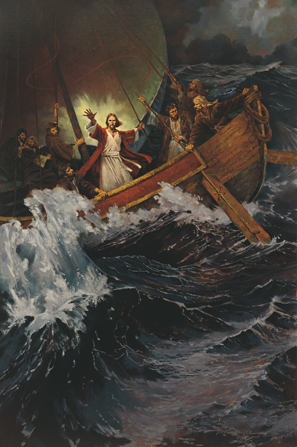 to work in me, I felt the healing. I still feel it every day (for that trial). The loss of my brother will always be a hole in my heart, but it is much less painful now than it was two years ago. I feel like I was able to heal because nothing was ongoing. Once the initial shock was gone, there was not much left to do other than heal. There are always little moments when it’s harder – like when we’re taking family pictures, or on his birthday, or on the anniversary of his death, or when I watch someone else deal with the loss of a loved one. But in general, the pain is past. The trial is, for the most part, over.
This trial is different.
It may never be over. It may never end. Things may never, in this life, get better – at least not the way I want them to.
And I think accepting that is hard for me. Learning how to live with the situation how it is feels like giving up. It feels like being okay with things the way they are is failure. Accepting that I don’t have any power over this situation is like accepting defeat.
I guess I just don’t want to endure pain for the rest of my life. This is a spiritual and emotional pain, rather than a physical one – but I think the concept is the same. I can’t imagine living in chronic pain. I know there are people who do it. A good sister in my ward is in constant pain and confined to a wheelchair. There are actually two sisters in our ward in that condition. How do they stand it? How do they find happiness? It wasn’t their choice to be in that situation.
I think deep down I feel a little bit like this trial is my fault. I feel as if there is something I could have done. If only I had made this decision, or that decision, I wouldn’t be in this position.
Sometime in the past year I remember thinking to myself that Heavenly Father wanted me to be in this position. He knew before I did the pain I would be in. He knew it a long time ago, before I even saw it coming. He knew when He told me to make the decision I made that would lead me to this place. He knew this was the only way I would learn the things I needed to learn.
I read this quote from Orson F. Whitney earlier today in a General Conference talk by Elder Robert D. Hales,
No pain that we suffer, no trial that we experience is wasted. It ministers to our education, to the development of such qualities as patience, faith, fortitude and humility. All that we suffer and all that we endure, especially when we endure it patiently, builds up our characters, purifies our hearts, expands our souls, and makes us more tender and charitable, more worthy to be called the children of God, … and it is through sorrow and suffering, toil and tribulation, that we gain the education that we come here to acquire.
I loved what Bonnie said about tanning leather on my most recent post at Real Intent:
You would think that the strongest leather comes from hides with lots of flesh left on them, nice and thick, that haven't been treated too badly. In fact, the strongest leather comes from well-scraped hides that have been acid-soaked and worked and left in the sun, then acid-soaked and worked and left in the sun, and acid-soaked and worked and left in the sun. Unworked leather cracks under pressure. Well-worked leather is soft and supple, water-proof and flexible. We don't grow strong by being left alone.
Tender. How do you tenderize something? Usually by beating it repeatedly. Ever seen a meat tenderizer?  They come in different varieties, but almost always they have some kind of prongs or texturized surface. Ours is a very scary looking hammer. If you want to cook some really tender meat, you beat the meat repeatedly with the scary hammer. How do we become tender? By being beating, spiritually, emotionally, sometimes physically. By undergoing trials and adversity.
I once wrote about the three sources of trials and adversity in this life. Suffering is usually caused either by our own sins, the sins of others, or just by the natural conditions of this world. The suffering I experienced when my brother passed away was part of the natural conditions of this world. No one made him get cancer. His cancer wasn’t a result of some sin he committed. It just happened. It was tragic and painful, but it just happened. This trial is hard for me because I can’t help feeling like I am suffering it because of a sin I committed. I keep wanting to simply repent and make it better – but I can’t because it isn’t my sin to repent of.
Elder Hales said, “In this mortal life, each of us is going to experience pain in one form or another… It often comes as a result of our disobedience to the commandments of God, but it also comes to those who are doing all they can to keep their lives in line with the example of the Savior.” I have been spending all this time thinking that this kind of pain shouldn’t come to me because of the way I was living my life. I made good choices, so I shouldn’t have to experience this trial. But life doesn’t work that way. All the good choices I could ever make can’t stop others from making bad choices.
I really liked the last part of Elder Hales’ talk where he talked about how important caregivers are as we are experiencing pain. “There are times when, no matter how independent we may be, we must entrust others with our care. We must surrender ourselves to them. Our caregivers are those who assist in the healing process.”

If you know anything about me, you know that I am fiercely independent, strong willed, and incredibly head strong. In fact, earlier this year when my husband was gone on frequent business trips a member of our Relief Society presidency called me and asked if I needed anything. She commented that she wasn’t too worried about me because she could tell how independent I am, but she wanted me to know that they were there if I needed anything. I told her that she’s right, I can take care of everything, but it was nice to know they were thinking about me (and it was – it always helps me take care of myself when I know people are thinking of me).
So “surrendering” to outside help is something I would not consider doing. Last fall when I was having some emotional issues my husband made me see a therapist a few times. I would never have made the appointments on my own. A few months ago I finally broke down and talked to the bishop. It felt good to talk to him and get counsel, but I didn’t go back, thinking I could take care of it from there.
This week I am going to work on finding some caregivers. A person in chronic pain probably sees a doctor regularly. I think I should probably learn to surrender to some caregivers.
Surrendering to the ultimate Caregiver is probably going to be the hardest thing for me. Elder Hales said,
The Lord is our ultimate caregiver. We must surrender ourselves to the Lord. In doing so, we give up whatever is causing our pain and turn everything over to Him. “Cast thy burden upon the Lord, and he shall sustain thee”. “And then may God grand unto you that your burdens may be light, through the joy of his Son”. Through faith and trust in the Lord and obedience to His counsel, we make ourselves eligible to be partakers of the Atonement of Jesus Christ so that one day we may return to live with Him.
Giving up the thing that is causing me pain is going to feel like defeat. I don’t know how not to feel like it is. I don’t know how not to feel like I have somehow failed. I don’t know how to do it, and I am pretty sure that is the thing causing me the most pain.
Monday, April 9, 2012
Washed Clean
I was sitting in sacrament meeting at the organ - which meant that someone else had my kids and I could ponder during the sacrament. My thoughts drifted to the events of the previous day, Saturday.
One of the perks of playing the piano is being asked to play at baptisms. Saturday was one of those occasions for me. The member of the bishopric who was presiding told the young woman who was baptized that she had been washed clean and that it she would continue to repent and be worthy to partake of the sacrament she could be washed clean each Sunday as she partook of the sacrament.

I knew this doctrine before and I have always believed it, but that day as I took the tiny cup of water and felt the cool liquid wash down my throat, I actually felt clean. I felt as if in that moment I was as perfect and clean as I was after my baptism.
Recently I have been thinking (and writing) about repentance and the atonement, and I feel like as this has been a focus in my personal study, I have been applying the principles of repentance more effectively.

It is this application of the atonement that has made the difference. In order for the sacrament to cleanse us, we must be repentant.
I know that I am clean - perfectly clean - after repenting and partaking of the sacrament. I know that as I strive to live the gospel and repent when I fall short and rely on Christ, I can partake of the sacrament and be cleansed as if by the waters of baptism.
Do you feel clean when you take the sacrament? How do you feel as you apply the principles of the atonement in your life?
- Posted using BlogPress from my iPhone
One of the perks of playing the piano is being asked to play at baptisms. Saturday was one of those occasions for me. The member of the bishopric who was presiding told the young woman who was baptized that she had been washed clean and that it she would continue to repent and be worthy to partake of the sacrament she could be washed clean each Sunday as she partook of the sacrament.

I knew this doctrine before and I have always believed it, but that day as I took the tiny cup of water and felt the cool liquid wash down my throat, I actually felt clean. I felt as if in that moment I was as perfect and clean as I was after my baptism.
Recently I have been thinking (and writing) about repentance and the atonement, and I feel like as this has been a focus in my personal study, I have been applying the principles of repentance more effectively.

It is this application of the atonement that has made the difference. In order for the sacrament to cleanse us, we must be repentant.
I know that I am clean - perfectly clean - after repenting and partaking of the sacrament. I know that as I strive to live the gospel and repent when I fall short and rely on Christ, I can partake of the sacrament and be cleansed as if by the waters of baptism.
Do you feel clean when you take the sacrament? How do you feel as you apply the principles of the atonement in your life?
- Posted using BlogPress from my iPhone
Tuesday, February 1, 2011
Temple Mirrors of Eternity: A Testimony of Family
(find the talk here)
Elder Gerrit W. Gong’s talk was funny, nice, and simple. He told a cute story about sending fresh homemade bread to his son and his companions in the MTC. Then he went on to talk about his ancestors.
My interest in my husband’s ancestry has been peaked recently, due to increased contact with his paternal grandmother. My husband was adopted by his stepfather at a young age, and never really knew or had contact with is biological father. Nevertheless, his genetics are predominantly from his biological father’s side, and I can even see a lot of my own children in that family – which dates back to the early pioneer settlers.

Elder Gong spoke of these mirrors in the sealing rooms of our temples. The mirrors are positioned across the room from each other so that when you look into one of the mirrors, it seems to be that you can see repetitions of yourself forever and ever. We believe that temple ordinances seal us to our family and more importantly, to Heavenly Father for eternity. As long as we are sealed to each other (and to Heavenly Father) in the temple, and we live faithful to those covenants, our posterity will be never ending.
I liked this comment from Elder Gong:
The world pursues enlightened self-interest. Yet the power is not in us to save ourselves. But is is in Him. Infinite and eternal, only our Savior’s Atonement transcends time and space to swallow up death, anger, bitterness, unfairness, loneliness, and heartbreak.
My favorite part of the atonement isn’t always the part that redeems me – although that part is truly the most significant part. Usually the part that comforts me the most is that part that swallows up pain, anger, unfairness, loneliness, and heartbreak – because I have seen a lot of that in my life.
Elder Gong says “Sometimes things go wrong even though we have done our very best.” I’m sure parents everywhere have seen this and can testify of its truthfulness. Parents lose their children to the evil influences of the world. Parents become unable to bear their own children. Parents lose children in death before them. Parents lose a spouse through death or unfaithfulness or divorce. “When we remember [the Savior], He can stand with us ‘at all times and in all things and in all places that [we] may be in.’ His ‘faithfulness is stronger than the cords of death.’ In drawing to Him, our Savior also draws us to our Father in Heaven.”
What do the temple mirrors make you think about? Have you experienced things going wrong even when you have done your very best? How do you rely on the Saviors atonement for more than just redemption from your sins?
Thursday, January 12, 2012
Come, Let Us Anew
I have started writing this post a few times in the past week… but things have been crazy, and I didn’t think I could just jump back into blogging without explaining my absence, or at least incorporating my reasons into a post.
Remember this talk by President Uchtdorf a few years ago? He talked about slowing down when life gets crazy and focusing on the most important things. I love this blog – I love studying the gospel in depth and writing about the things I am learning. However, over the Christmas holiday we had 10 extra people in our house (including 3 extra children) and most days there were between 2 and 4 extra dogs. We have a relatively roomy home, but with that many people it was all I could do to keep up with my own chores/family and spend time with my parents, brothers and sisters and their children and dogs.
So basically, the blog went on hold, and I spent some much needed quality time with my mom and dad and siblings. We haven’t all been together since my brother passed away last summer. And my other older brother was able to be sealed to his wife’s twins from her first marriage. It was a really great time, and I had to fight the urge to spend time blogging – it would have made me frustrated and stressed (as if there wasn’t enough stress from having so many people to cook for and clean up after.)
I had to remind myself to follow President Uchtdorf’s advice about slowing down through turbulence.
My dear brothers and sisters, we would do well to slow down a little, proceed at the optimum speed for our circumstances, focus on the significant, lift up our eyes, and truly see the things that matter most.
The optimum speed for my circumstances over Christmas and New Year were reading my Book of Mormon as much as I could (even though I didn’t end up finishing before the new year) and writing as often as possible in my journal, attending Church meetings, spending time with my family playing games and eating, and doing what chores I could afterwards.
My husband left for a TDY assignment last Monday, and the rest of my family left the next day, so after a full house for nearly two weeks, it’s now just me and the kids for a few weeks.
I am left musing over the new year and resolutions and the atonement and basically feeling a suddenly drop in pressure.
Basically, let me just sum up my thoughts about the New Year:
1.) the atonement is a daily-use principle, and allows us to make “resolutions” each day, as if it were a new year every day of the year
2.) I usually make long-term goals at General Conference time each year – April and October – so there’s my excuse for not making any New Year’s resolutions.
3.) my husband and I talked about having a family theme for each year (we never have before, but we think we should start). More about that when he gets back.
Looking back, I would say 2011 was “the best of times, and the worst of times” for me. Between 2010 and 2011… well, let’s just say life has not been what I expected it to be. That’s the thing about life and relationships. You don’t know what is in store, and you cannot predict the behavior of other people. Period. I am trying to learn how to live my life the right way, and it is hard. The Lord has counseled me to stay in close contact with Him so I can know His will for me, and I think that is going to be my personal theme this year.
This year, 2012, will be the year I figure out how to live my life the way Heavenly Father wants me to live it. Not the way I think I should live it, or the way I think He wants me to live it – rather, I will seek personal revelation and inspiration so that I can actually live my life the way He wants me to. So that every thought, word, and deed is what He wants for me.
So, “come, let us anew our journey pursue”!
Do you make New Year’s resolutions? Do you use the atonement daily? What are your thoughts on the new year?
Thursday, September 8, 2011
Testimony
(find the talk here)
Find more great comments on President Samuelson’s talk over at the General Conference Book Club on Diapers and Divinity:
I had the privilege of attending Brigham Young University, and President Cecil O. Samuelson was the University President during my studies there. I received a lot of counsel from President Samuelson over the years at the University, and I have always been very appreciative of his wisdom and guidance. He gave a really pivotal talk to women in the fields of math, science, and engineering when I was just starting out in my educational path. That talk influenced my understanding of a lot of gospel principles. Perhaps I will post my notes here later.
On the topic of President Samuelson’s Conference talk, I have to admit that I only listened to this talk during Conference and maybe once since then. I usually focus on listening to the talks of the Apostles, since those are the words of those called as prophets. But I do find strength and wisdom in all the other talks from General Conference, and I try to make sure that I study all of them, because their words are still inspired and inspiring.
President Samuelson testified that “the fundamentals of gaining and retaining a testimony of the gospel of Jesus Christ are straightforward,clear, and within the capacity of every person.” “Within the capacity of every person” means that no matter who you are, no matter what your trials and struggles, no matter your situation in life, you are eligible to receive a testimony of the gospel. Heather over at Women in the Scriptures recently posted about this. She wrote, “Like the Nephites, modern Later-day Saints, often get conceited in thinking that we have the monopoly on faith and testimony.” We do not have to be baptized to receive a testimony – which makes complete sense if we remember that the first principle of the gospel is Faith in the Lord Jesus Christ. What prerequisite is there to faith? Absolutely none at all. And faith is the only perquisite to testimony.
Growing up not in Utah, one of the most important lessons I learned was that we can find truth anywhere (and the Spirit will testify of the truth) and that when we were sharing the gospel, we needed to build on the existing faith and testimony of the person we were talking to. Most people already have, to some extent, some kind of faith and testimony. To tell them that they are faithless and testimony-less will only drive them away. A more effective method for conversion would be to build on their existing testimonies, like Ammon did with King Lamoni – when King Lamoni recognized something in Ammon that was like the “Great Spirit” Ammon didn’t say “You don’t know what you’re talking about, there is no ‘Great Spirit’ – only God.” Instead Ammon said, “I am not the Great Spirit, but tell me what you know about the Great Spirit!” Ammon then proceeded to build on King Lamoni’s faith and testimony of the Great Spirit, which Ammon helped him understand was really God the Father.
“Everyone who is willing to pay the price—meaning keeping the commandments—may have a testimony.” The Lord says that anyone who “will hear may hear.” (emphasis added) All we need to do is be willing, and the Lord will grant us a testimony.
So how do we gain a testimony? President Samuelson quoted the greatest scriptural quote on testimony-building.
“And when ye shall receive these things”—meaning you have listened, read, studied, and pondered on the question at hand—“ask God, the Eternal Father, in the name of Christ, if these things are not true”—meaning you will pray thoughtfully, specifically, and reverently with a firm commitment to follow the answer to your prayer—“and if ye shall ask with a sincere heart, with real intent, having faith in Christ, he will manifest the truth of it unto you, by the power of the Holy Ghost.
“And by the power of the Holy Ghost ye may know the truth of all things”(Moroni 10:4–5).
President Samuelson then likened a testimony to a living organism – one that could live or die, depending on how we take care of it.
Of the observations and suggestions President Samuelson recorded from his young adult friends, he said, “Unfortunately and especially at times of our own struggle and distress, we may temporarily forget or discount their applicability to us personally.” This is all too true for me. Sometimes I forget principles, but more often than not I find myself discounting their applicability to me.
“We must understand [a might change of heart] often occurs gradually, rather than instantaneously or globally, and in response to specific questions, experiences, and concerns as well as by our study and prayer.” I frequently find myself lamenting the fact that I cannot change overnight. But when I look back to the person I was ten years ago, I realize that my heart has changed – mightily. My “mighty change of heart” has come through experiences, and through much study and prayer, and I am sure through the prayers of others, as Alma the Younger’s change of heart was brought about by his father’s prayers. When I remember that my heart has changed (for the better) I get overwhelmed at the ability of the Lord to touch my heart and allow it to change.
When I am in the midst of trials and adversity, I sometimes doubt what I know. “We must learn to trust the things that we believe in or know to sustain us in times of uncertainty or with issues where we struggle.” I have been giving many great blessings in my life that have at time sustained me during times of uncertainty, but sometimes it takes me a while wallowing in my uncertainty before I realize that I know things, and that I will never not know those things. “We must learn to grow from our challenges and be grateful for the lessons learned that we cannot gain in an easier way.”
Alma taught that “gaining a testimony is usually a progression along the continuum”. I had never thought of testimony this way, but I am very familiar with continuums. I believe most things in life are continuums, and that Heavenly Father meant for this world to be that way. The continuum President Samuelson is speaking of is “of hoping, believing, and finally knowing the truth of a specific principle, doctrine, or the gospel itself”. In some principles and doctrines, I may be still in the “hoping” area of the continuum, while in others, I have already moved to the “knowing” stage.
And of course, President Samuelson couldn’t leave out the “primary answers” to “How do we build our testimonies?” “Prayers, scripture and gospel study, attendance at Church meetings,temple worship, fulfilling visiting teaching, home teaching, and other assignments all strengthen our faith and invite the Spirit into our lives.When we neglect any of these privileges, we place our testimonies in jeopardy.” Remember when the answer to every question in Primary was “read your scriptures, say your prayers, and go to church”? Well, turns out the answers haven’t changed.
“It is good to remember that being too hard on yourself when you make a mistake can be as negative as being too casual when real repentance is needed.” This is a great piece of advice because I often err on both accounts – being too hard on myself in some instances, and in other instances denying my need to repent.
And perhaps President Samuelson’s most profound remark:
We must always be clear that the Atonement of Christ is fully and continuously operative for each of us when we allow it to be so. Then everything else fits into place even when we continue to struggle with certain details, habits, or seemingly missing parts in the mosaic of our faith.Too often I see people (including myself) discounting the atonement because we are not perfect all at once. When we continuously struggle with a habit or sin that we are trying to repent of, we feel as if the atonement is not working for us. But as President Samuelson says, the atonement is “fully and continuously operative for each of us when we allow it to be so.” When we remember that fact, things will not seem as bleak when we continue to struggle.
President Samuelson closed his remarks with his personal testimony and then with the comment that “if you are struggling, you can rely on the truthfulness of the testimonies you hear from this pulpit at this conference.” What a great principle of the gospel! That we can strengthen our testimonies by listening to the Spirit testify of truth through the testimonies of others.
How do you take care of your testimony? Do you sometimes have to rely simply on the testimonies of others when your testimony may be weak? Do you believe that everyone is eligible to receive a testimony of the gospel?
Subscribe to:
Posts (Atom)
